
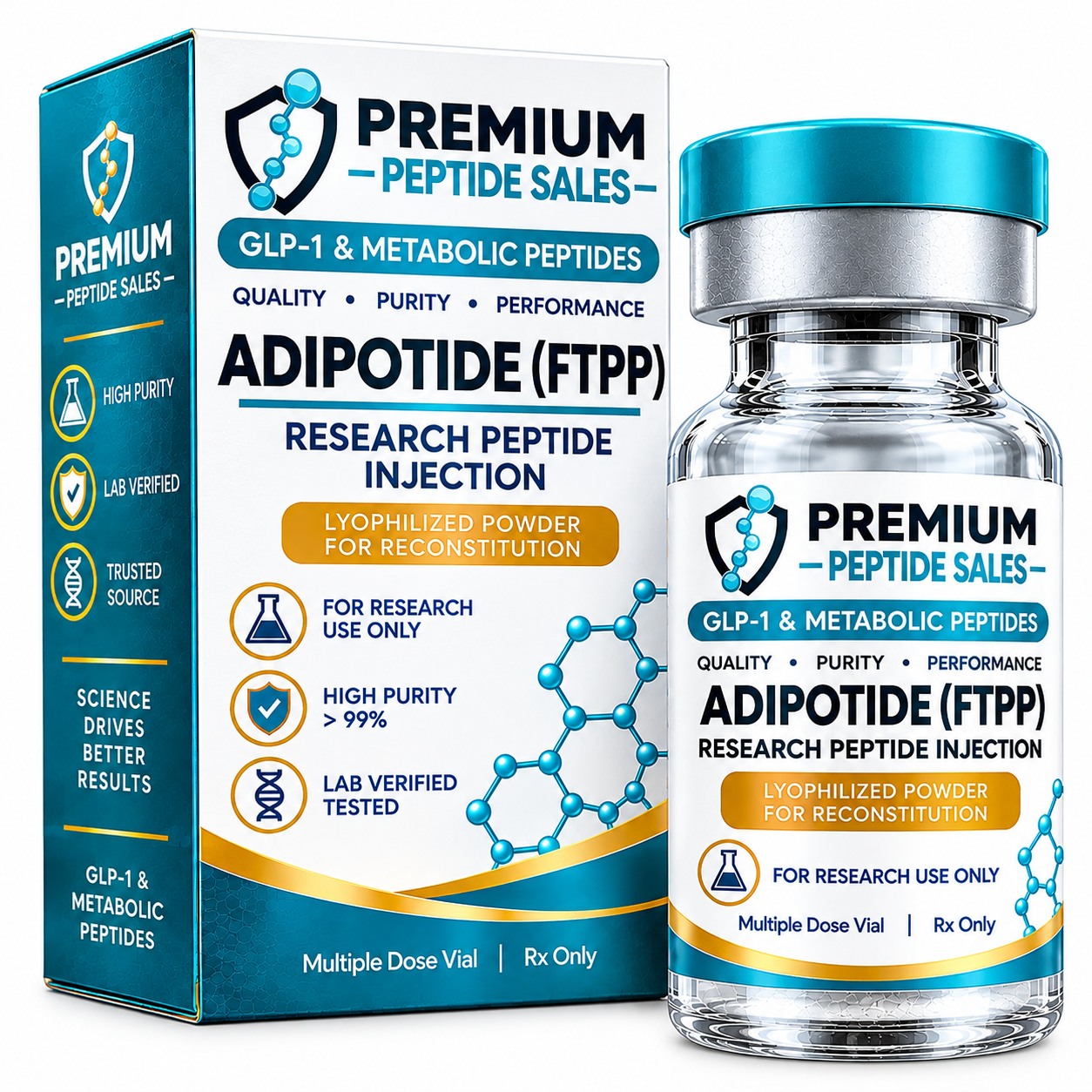
Adipotide Peptide (FTPP): Research, Potential Benefits, and Product Information
What Is Adipotide Peptide?
Adipotide peptide is an experimental peptide-based compound researched for its potential effects on the blood vessels that supply white adipose tissue. It is also known as FTPP or prohibitin-targeting peptide 1.
Unlike established weight-management medicines, adipotide remains investigational. Research has primarily examined its biological mechanism and effects in animals. Animal findings cannot establish that the compound is effective or safe for people.
For readers researching adipotide for sale, understanding its experimental status is essential. Adipotide is not an approved weight-loss treatment, and products marketed online should not be assumed to have verified identity, purity, safety, or authorization for human use.
Adipotide Peptide Benefits: What Does the Research Show?
Searches for adipotide peptide benefits often relate to early research into targeted effects on adipose tissue.
In a 2011 preclinical study published in Science Translational Medicine, researchers investigated adipotide in obese monkeys. The study reported reductions in body weight and white adipose tissue, alongside changes in insulin resistance. It also documented effects on kidney function. These were animal findings, not proof of a safe or effective human treatment.
The research interest centers on several potential biological effects:
- Targeted adipose-tissue research: Investigating how the compound interacts with blood vessels associated with white fat.
- Mechanism of action: Studying a process designed to induce cell death in targeted tissue vasculature.
- Metabolic research: Exploring observed changes in animal models and the biological pathways involved.
These findings should be described as preliminary research rather than established clinical benefits. There is no validated evidence that adipotide produces reliable weight loss in humans.
Adipotide FTPP for Sale: What Should Buyers Understand?
People searching adipotide ftpp for sale or adipotide peptide for sale may encounter listings with varying claims about product quality, purity, and intended use.
A responsible product-information page should make the product’s status clear and avoid unsupported therapeutic claims. If a material is offered for legitimate laboratory research, its listing should clearly distinguish it from approved medicines.
Before relying on a research-material listing, review the available documentation:
- The stated compound identity and intended research use.
- Batch-specific analytical results, if provided.
- Supplier and manufacturer information.
- Storage and handling information supported by the documentation.
- Applicable rules governing the material, its shipment, and its destination.
A certificate of analysis is one piece of documentation; it does not independently establish clinical safety, injectable suitability, or regulatory approval.
Buy Adipotide: Product Verification and Responsible Research
The phrase buy adipotide reflects transactional search intent, but a search listing does not establish that a product is legitimate or appropriate for human use.
Likewise, searches such as adipotide buy, adipotide purchase, buy adipotide online, adipotide online, and buy adipotide for sale can lead to listings that make claims beyond the available evidence.
Before making any decision about a research material, verify the supplier’s identity, documentation, product description, and applicable legal requirements. Do not rely solely on promotional claims, testimonials, or unverified purity percentages.
Adipotide has not been established as an approved treatment for obesity or other medical conditions. It should not be represented as an alternative to authorized weight-management treatments or professional medical care.
Buy Adipotide FTPP and Buy FTPP Adipotide Peptide: Understanding Product Claims
Queries such as buy adipotide ftpp, buy ftpp adipotide, and buy ftpp adipotide peptide use different wording for searches concerning the same experimental compound.
The presence of FTPP in a product title does not, by itself, verify chemical identity or quality. Product pages should use accurate terminology, identify the intended research context, and clearly disclose the limits of available evidence.
For research-focused information, prioritize verifiable specifications over claims that a product is clinically effective, suitable for self-experimentation, or guaranteed to produce a particular result.
Adipotide Peptide Dosage: What Is Known?
The search phrase adipotide peptide dosage requires particular care because no validated, approved human dosing regimen has been established.
Amounts used in animal experiments must not be converted into personal dosing instructions. Differences between species, formulation, exposure, and safety profiles mean that animal-study protocols cannot establish a safe human dose.
The published preclinical research also reported kidney-related effects. Anyone encountering a website that advertises a guaranteed human dosage or a proven treatment protocol should verify its claims against primary scientific sources and recognize that such claims are not supported by an established clinical dosing standard.
Adipotide Nasal Spray for Sale: Evidence and Formulation Claims
Searches for adipotide nasal spray for sale may return claims about alternative delivery formats. A nasal-spray listing should not be taken as evidence that the formulation has been clinically validated.
The available animal research does not establish that a commercial nasal-spray version is safe, effective, appropriately absorbed, or authorized for human use. Claims about nasal bioavailability, effectiveness, or equivalent dosing require formulation-specific evidence.
Product descriptions should therefore avoid presenting a nasal spray as an established treatment or suggesting that an unverified formulation is interchangeable with materials used in published research.
Adipotide Safety and Regulatory Status
Adipotide remains an experimental compound rather than an established weight-loss medicine. The 2011 monkey study reported changes in renal proximal tubule function, making safety a central limitation of the available research.
A first-in-human Phase I study of prohibitin-targeting peptide 1 was registered as ClinicalTrials.gov study NCT01262664. The registry records the study as terminated and reports no results posted. A registered study is not evidence of approval or proven clinical benefit.
Regulatory authorization is product- and jurisdiction-specific. Do not claim that adipotide has been approved by a regulator unless a current official record supports that statement.
Frequently Asked Questions
What is adipotide peptide used for?
Adipotide has been studied experimentally for its effects on the blood vessels associated with white adipose tissue. It is not an established or approved weight-loss treatment.
Are adipotide peptide benefits proven in humans?
No. Early findings come primarily from animal research. These results do not establish human effectiveness or safety.
Is there an approved adipotide peptide dosage?
No validated, approved human dosing regimen has been established. Animal research amounts should not be used as instructions for human administration.
Does an adipotide nasal spray have proven effectiveness?
A product listing alone cannot establish effectiveness, safety, absorption, or authorization. Formulation-specific clinical evidence would be required.
What documentation should a research-material listing provide?
Look for clear product identification, intended use, supplier details, and relevant analytical documentation. Such documents do not establish approval for human use.
Conclusion
Adipotide peptide is an experimental compound with a limited evidence base and important unresolved safety questions. Scientific interest in its potential effects on adipose tissue does not establish a proven treatment for weight loss.
Whether researching adipotide peptide for sale or evaluating claims about FTPP, readers should prioritize transparent documentation, accurate descriptions, and primary scientific references. A credible page should explain what is known, what remains uncertain, and why experimental materials must not be confused with approved medicines.

Reviews
There are no reviews yet.